CM CAPACITIVE PROXIMITY SENSORS About
PRODUCT DESCRIPTION
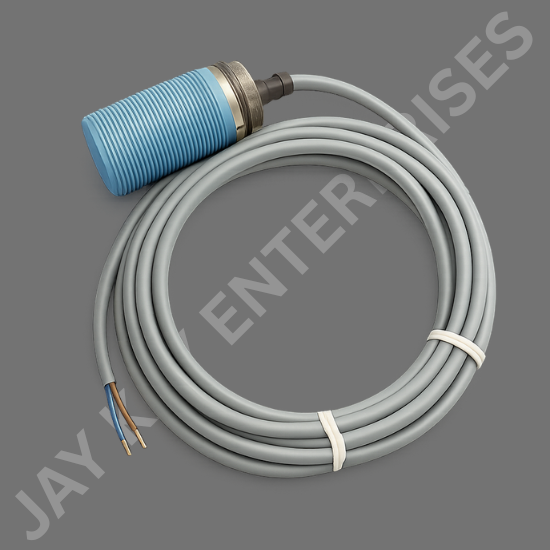
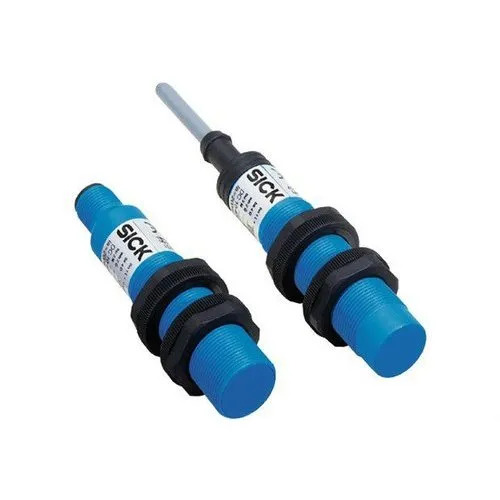
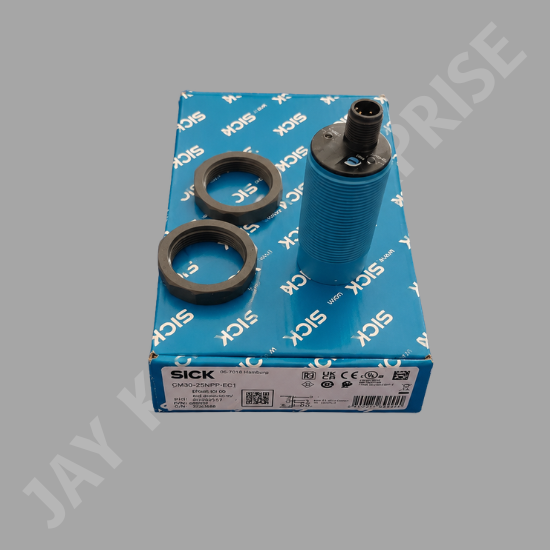
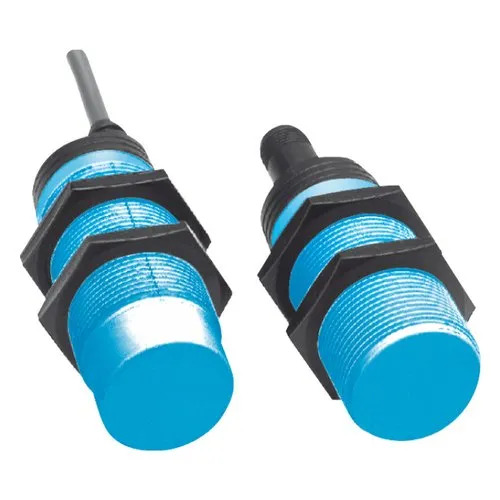
The CM capacitive proximity sensors detect objects and levels regardless of color, reflectance, and gloss of the surfaces. In the process, they detect powdery, granulated, liquid, and solid materials even through non-metallic walls made of plastic or glass. The proven and rugged sensors are cost-effective and feature high electromagnetic compatibility (EMC), which prevents switching errors and reduces downtime. The variants with a PTFE housing are ideal for detecting the levels of chemical compounds, e.g. acids or solvents.
AT A GLANCE
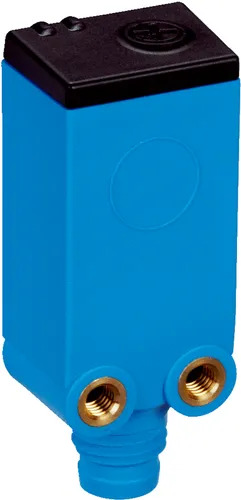
- Cylindrical housing in M12, M18, and M30 models.
- Sensing ranges of up to 25 mm.
- Enclosure rating: IP67, IP68, IP69K J K L M N O P Q R S T.
- Visual adjustment indicator.
- High electromagnetic compatibility.
- Electrical configuration: DC 4-wire and AC 2-wire.
- Adjustment of the switching point via potentiometer (M18 and M30) and teach-in button (M12).
YOUR BENEFITS
- Cost-effective sensors for traditional maximum fill level detection and object detection.
- Less machine downtimes thanks to high shock and vibration resistance.
- Stable processes thanks to high EMC and easy switching point adjustment using a potentiometer or teach-in button.
- Quick installation thanks to visual adjustment indicator and universal mounting systems.
- Especially durable PTFE variants for use in aggressive ambient conditions
Fields of application
- Detection of solar wafers in the solar and electronics industry.
- Detection of aluminum, cardboard, and paper in the packaging industry.
- Detection of wood in wood processing machines.
- Detection of rubber and plastic granulates in the plastics industry.
- Detection of various liquids in the pharmaceuticals and chemicals industry.
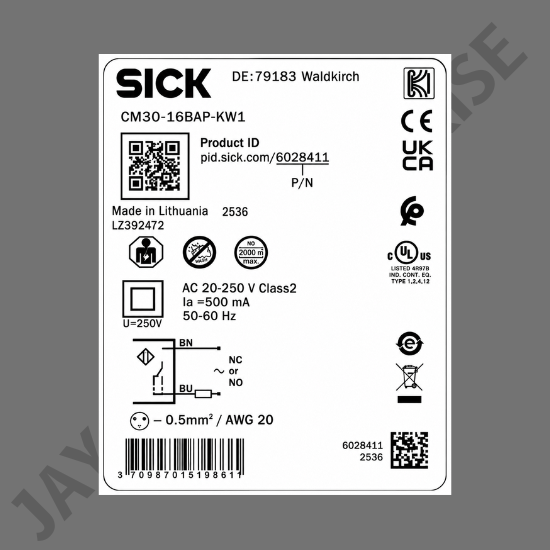
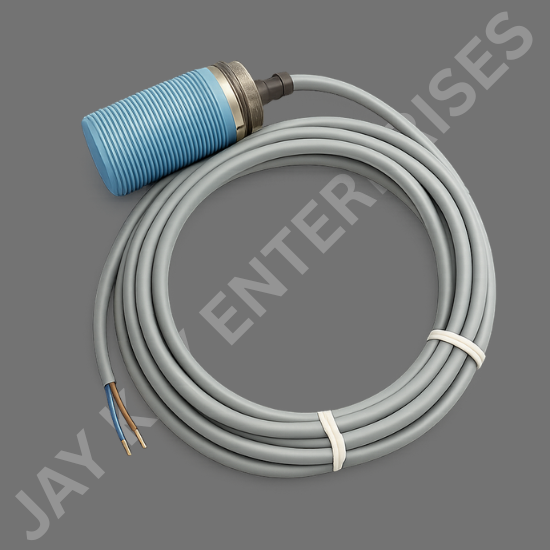
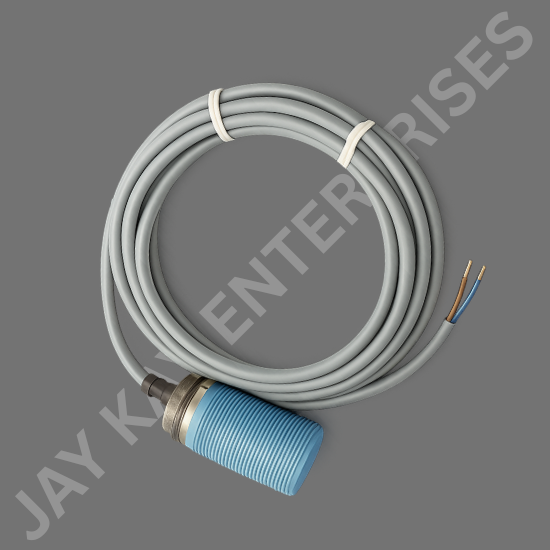
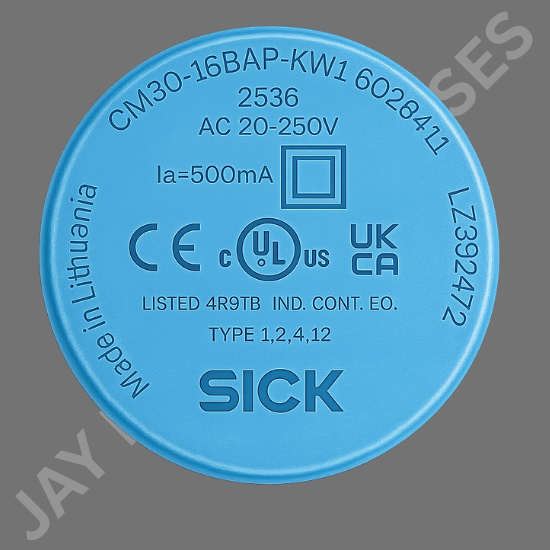
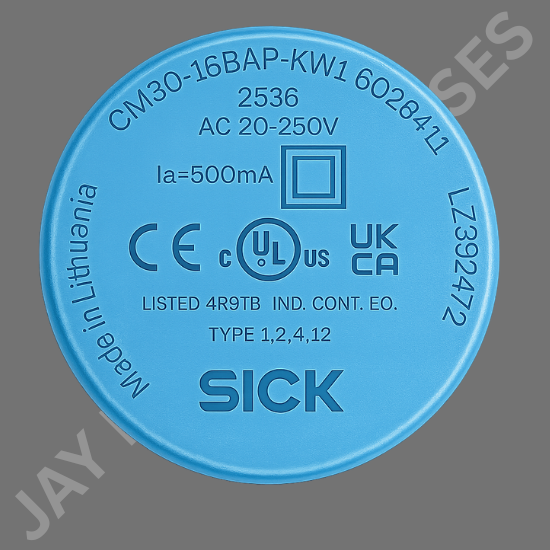
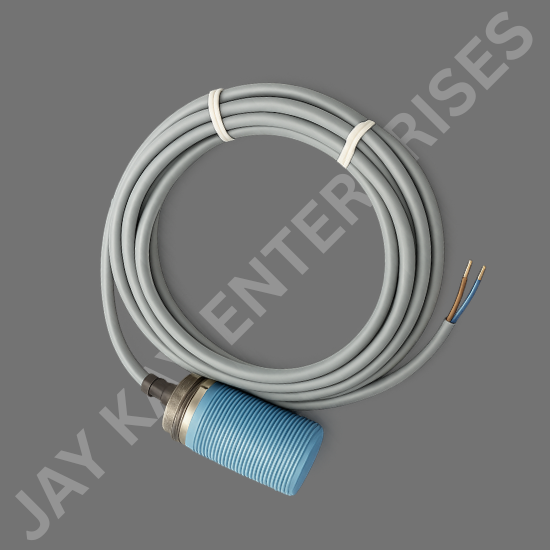
Robust Industrial DesignEngineered with durability and safety in mind, CM Capacitive Proximity Sensors are housed in high-quality plastic (PBT) for long-lasting performance. The IP67 rating ensures protection against dust and water, making them suitable for challenging industrial settings. Their compact construction, along with a 2-meter PVC cable, provides flexibility and ease of integration into various monitoring systems.
Accurate Monitoring for Critical ApplicationsThese sensors excel at minimum fill level monitoring tasks, supporting a spectral range from 2 mm to 16 mm for precise object and liquid detection. The sensors respond reliably, making them ideal for applications where precise measurement and operational continuity are essential, such as in industrial automation, material handling, and storage systems.
FAQ's of CM CAPACITIVE PROXIMITY SENSORS:
Q: How do CM Capacitive Proximity Sensors function in minimum fill level monitoring?
A: CM Capacitive Proximity Sensors detect changes in capacitance when close to target materials, enabling them to sense liquid or granular fill levels within tanks or containers. This helps prevent overflows or running empty in various industrial systems.
Q: What environments are these sensors suitable for?
A: Thanks to their IP67 rating and operating temperature range of 25C to +80C, these sensors are ideal for dusty, wet, or otherwise challenging industrial settings where reliable sensing and protection are crucial.
Q: When should I use NC or NO output functions?
A: The choice between NC (normally closed) and NO (normally open) depends on your control system and safety requirements. Use NC for fail-safe circuits, ensuring continuity when inactive, and NO for triggering actions only upon detection.
Q: Where can I install these capacitive sensors?
A: With a 2-meter PVC cable and compact design, these sensors can be mounted adjacent to tanks, hoppers, or piping systems for direct detection of solids or liquids within a 2 mm to 16 mm range.
Q: What is the main benefit of using CM Capacitive Proximity Sensors in industrial applications?
A: The primary advantage is precise, non-contact detection of minimum fill levels, improving process reliability, reducing manual effort, and helping maintain operational safety and efficiency.
Q: What materials are the sensors made from, and how does this affect durability?
A: These sensors use robust plastic (PBT) materials, offering excellent resistance to chemicals and environmental stress, thus ensuring longevity and reliable performance even in harsh industrial environments.
Q: How often do these sensors require maintenance?
A: With their sturdy construction and sealed IP67 housing, CM Capacitive Proximity Sensors require minimal maintenance under normal operating conditions, reducing downtime and maintenance costs.




 Send Inquiry
 Send Inquiry

